Skip Navigation
Office of the Provost

Office of the Provost

Task Force on Entrepreneurship and Innovation

The Task Force on Entrepreneurship and Innovation is charged with conducting a comprehensive review of entrepreneurship and innovation at the University of Connecticut. This includes examining academic programs, research initiatives, and opportunities that support faculty, staff, and students.

The task force will recommend strategies to strengthen and expand UConn’s efforts in these areas, advancing the University’s mission as a leading R1 research university and land-grant institution. Its work will guide future initiatives to foster a vibrant, collaborative ecosystem of discovery, creativity, and economic impact across all campuses.

The taskforce will provide actionable recommendations to the Offices of the Provost and the Vice President for Research to strengthen and expand efforts in these areas, ensuring the university remains at the forefront of discovery, economic development, and societal impact. The committee is chaired by Vice Provost Amy Gorin and Interim Vice President for Research Lindsay DiStefano. 

Committee Membership:

Subgroup: Academic Programs & Curriculum

Kathy Rocha, Associate Director, Werth Institute

Michelle Cote, Interim Director, Werth Institute

Kathleen Lombardi, Co-Director of the Intellectual Property and Entrepreneurship Law Clinic

Amit Savkar, Director, Q-Center

Tiffany, Co-Director, Nursing and Engineering Innovation Center

Leila Daneshmandi, Director, Entrepreneurship Hub, College of Engineering


Subgroup: Translational Research & Startup Development

Amit Kumar, Director, Q-Center

Leila Daneshmandi, Director, Entrepreneurship Hub, College of Engineering

Mingyu Qiaoe, Assistant Professor of Innovation and Entrepreneurship, Nutritional Sciences

Rajesh Lalla, Associate Dean for Research, School of Dental Medicine

Rahul Kandia, Associate Professor, Physiology & Neurobiology

Manos Anagnostou, Executive Director, UConn Tech Park & Institute of the Environment & Energy

Joel Levine, Co-Director and Founding Director, Colon Cancer Prevention Program

Jennifer Mathieu, Executive Director, CT Center for Entrepreneurship and Innovation

Michelle Cote, Interim Director, Werth Institute


Subgroup: Faculty, Staff, and Student Engagement

Yupeng Chen, Associate Professor, Biomedical Engineering

Kylene Perras, Assistant Dean, Operations & Strategic Initiatives

Tiffany Kelley, Co-Director, Nursing and Engineering Innovation Center

Leslie Shor, Vice Provost and Dean, The Graduate School

Amit Savkar, Director, Q-Center

Jennifer Mathieu, Executive Director, CT Center for Entrepreneurship and Innovation

Michelle Cote, Interim Director, Werth Institute


Subgroup: Industry Engagement & Ecosystem Development

Mohamad Alkadry, Professor, School of Public Policy

Sean Jeffery, Director of Clinical Pharmacy Services, Integrated Care Partners

Matthew Worwood, Assistant Professor-in-Residence, Digital Media & Design

Manos Anagnostou, Executive Director, UConn Tech Park & Institute of the Environment & Energy

Jit Banerjee, Associate Vice President, Innovation and Entrepreneurship

Kylene Perras, Assistant Dean, Operations & Strategic Initiatives

Jennifer Mathieu, Executive Director, CT Center for Entrepreneurship and Innovation

Michelle Cote, Interim Director, Werth Institute

Office of the Provost

Academic, Scholarly and Professional Integrity Update

Reporting Academic and Scholarly Misconduct 

The University of Connecticut recognizes that instructors play a crucial role in upholding the standards of Academic, Scholarly and Professional Integrity expected from our UConn community members. Instructors may encounter concerns that reveal academic, scholarly, or professional misconduct, which can result from continued poor scholarship or intentional acts that violate policy. 

Regardless of the circumstance, it is the expectation of all UConn community members to report academic, scholarly, or professional misconduct when they encounter concerns within academic work from students or faculty. The University defines academic and scholarly misconduct through four categories: Cheating, Plagiarizing, Misrepresenting, and Non-Compliance. These categories encompass a variety of actions or behaviors that violate the policy of Academic, Scholarly, and Professional Integrity and Misconduct (ASPIM). It is vital and expected of faculty to report concerns of academic or scholarly misconduct that may be occurring in their course, research, or any other academic endeavor at the University. 

How to report an incident of academic or scholarly misconduct?  

Reporting academic, scholarly, or professional misconduct is essential to maintaining the integrity of our academic community. Faculty can report incidents using the online reporting form. This form will guide you through the following sections: 

  1. Reporter Information: This section typically asks for details about the person submitting the report. It may include fields for your name, contact information, and your role at the university (e.g., faculty, staff, student). The form allows for anonymous reporting, but providing your information can help with follow-up. 
  1. Incident Information: This section gathers details about the misconduct. You might be asked to provide: 
  1. Date and Time: When the incident occurred. 
  1. Location: Where the incident took place (e.g., specific course or research). 
  1. Type of Misconduct: Categories such as cheating, plagiarism, misrepresentation, or non-compliance. 
  1. Description: A detailed account of what happened. Be as specific as possible, including any relevant context or evidence. 
  1. Involved Parties: Here, you list the individuals involved in the incident. This can include: 
  1. Respondent (Accused Student): The person(s) alleged to have committed the misconduct. 
  1. Witnesses: Anyone who witnessed the incident or has relevant information. 
  1. Supporting Documentation: This section allows you to upload any evidence that supports your report. This can include emails, screenshots, assignments, or any other relevant documents. 
  1. Submission: Finally, you will have the option to review your report before submitting it. Make sure all information is accurate and complete. Once submitted, the report will be reviewed by the appropriate university office. 

If you have questions about reporting an incident of academic, scholarly, or professional misconduct, feel free to set up a consultation appointment with the appropriate office. An office representative can meet with you virtually or in person to discuss your concern and provide guidance on how to manage it. 

Why is it important to report incidents of academic and scholarly misconduct for students? 

Faculty and community members are expected to report concerns they encounter to ensure that a student, whether undergraduate or graduate, receives due process when alleged of violating the ASPIM Policy or professional School Policies. Processes overseen by the Office of Community Standards (OCS), The Graduate School, the Law School, the Medical School, the Dental School, and the Pharm D program ensure that accusations are managed fairly and consistently among university processes and policies. This also ensures that the University or the faculty member does not face any legal liability for failing to provide a student with due process. 


Additionally, reporting allows the University to maintain a record of a student across the University. While many course instructors may find it sufficient to address the issue in their own course and not report the incident, it has other ramifications that a faculty member may not be aware of. These include: 


  1. Ongoing Concerns: The behavior being addressed in an instructor’s course may not be the only incident in which the student is using the same actions or behaviors. OCS, the Graduate School, and the professional schools keep track of all concerns reported and can address students who are repeating actions or behaviors that violate the academic or scholarly policies through an educational lens. 


  1. Consistency in Process: Reporting ensures that you are providing a student with a consistent process at the University. It allows students to exercise their right to request a hearing and contest allegations of violations of the ASPIM or their Professional Schools policies.  


  1. Consistency in Accountability: Reporting further ensures that students found in violation are held accountable appropriately. While the instructor controls the academic consequence, it may be necessary for the University to consider additional sanctions or dismissal. These decisions are not taken lightly by UConn offices that manage the processes but typically involve students who have a severe violation of the policy or have had several violations of the policy based on the same behavior. Reporting allows the University to address individuals consistently based on the incident and the student’s record at the institution. This will enable the University to implement educational measures that address the root of the academic or scholarly misconduct concern.  


Part of the process of reporting allows the University to identify concerns with individuals as well as ongoing concerns impacting our academic communities. Reporting data collected from ongoing reports allows the University to identify recurring incidents of behavior or actions. The University can then implement solutions to address these trends and provide guidance to faculty in managing issues that stem from new academic and scholarly misconduct. 


By reporting concerns, you help UConn maintain its commitment to fostering an intellectual community with the highest ethical standards. It encourages ethical behaviors, including truthfulness, fairness, and respect among our students and the next generation of researchers as teachers, mentors, supervisors, and successful stewards of grant funds. 


We hope that you have found the following informational useful and that you were able to take the following away.  


Educational Impact: Reporting misconduct helps maintain the integrity of the educational environment, ensuring that all students are evaluated fairly and based on their own work. 


Support for Faculty: Reporting misconduct can provide support for faculty members. By involving the appropriate university offices, faculty can receive guidance and assistance in handling these situations. 


Preventative Measures: Reporting can help the university identify patterns of misconduct and implement preventative measures, such as educational programs or workshops aimed at promoting academic and scholarly integrity. 


Community Trust: Maintaining a culture of integrity builds trust within the university community. When misconduct is taken seriously, it reinforces the value of honesty and ethical behavior. 


Long-term Consequences: Addressing misconduct early can prevent more serious issues down the line. Students who understand the consequences of their actions are less likely to engage in unethical behavior in the future, both academically and professionally. 

Office of the Provost

Academic Integrity: A Foundation of Trust, Honesty, and Respect 

October is a time to reflect on the core values that shape our academic community, trust, honesty, and respect. These values are the foundation of academic, scholarly, and professional integrity, and they guide how we teach, learn, and grow together at the University of Connecticut (UConn). 

As faculty, instructors, and academic leaders, you play a vital role in cultivating these values in your classrooms, research spaces, and mentoring relationships. Academic, scholarly, and professional integrity is not just about preventing misconduct, it’s about building a culture where ethical behavior is expected, modeled, and celebrated. It creates foundational skills that we hope all our UConn students use in their daily lives.  

Instilling Integrity in the Classroom 

This month, we invite you to take a moment to reflect on how you can actively promote academic, scholarly, or professional integrity in your course design and interactions with students. Here are a few ways to do so: 

  • Model Integrity: Share your own commitment to ethical scholarship. Talk openly about the importance of citing sources, conducting honest research, and respecting intellectual property. 
  • Create Transparent Expectations: Clearly outline academic integrity policies in your syllabus and course materials. Explain what constitutes plagiarism, cheating, misrepresentation, and noncompliance and why these behaviors undermine trust. 
  • Foster Respectful Dialogue: Encourage students to engage in respectful academic, scholarly, and professional discourse. Create space for diverse perspectives and emphasize the value of listening and learning from one another. 
  • Design for Integrity: Use varied assessment methods that promote original thinking and reduce opportunities for misconduct. Consider incorporating reflective assignments that ask students to connect their learning to personal values. 
  • Provide Educational Opportunities: Use moments of confusion or error as teachable opportunities. Not every student will get it right the first time, but with guidance, they can learn and grow. 

Demonstrating Commitment to Integrity 

Faculty can demonstrate their commitment to academic integrity in everyday actions: 


  • Celebrate Ethical Behavior: Recognize students who go above and beyond to uphold integrity in their work. For example, a student who consistently cites sources correctly and thoughtfully engages with scholarly material demonstrates a strong commitment to honesty in their work. Another student might go out of their way to clarify assignment expectations to avoid any unintentional misrepresentation, showing a deep respect for the learning process. Some students may take initiative to report errors in grading or acknowledge when they received unintended help, even if it might affect their grade, these actions reflect a high level of personal accountability and trustworthiness. Celebrate students who support their peers in ethical decision-making, such as encouraging collaboration within permitted boundaries or helping others understand the importance of academic, scholarly, and professional integrity. By highlighting these behaviors, instructors reinforce the message that integrity is not just about avoiding misconduct, it’s about actively choosing to do what’s right, even when it’s difficult. 
  • Engage in Conversations: Use class time or office hours to discuss the importance of trust and honesty in academic, scholarly, and professional settings. For instance, faculty might begin a class discussion by asking students what honesty means to them in the context of learning or invite students to share experiences where they faced ethical dilemmas in their academic work. Instructors can also use real-world examples, such as cases of plagiarism in published research or ethical breaches in professional settings, to spark dialogue about the consequences of misconduct and the value of doing the right thing. Additionally, office hours or informal check-ins can be opportunities to talk one-on-one with students about how they approach their work and how they handle pressure or uncertainty. These conversations help normalize integrity as a topic worth discussing, not just enforcing, and show students that their instructors care about their development as ethical scholars and professionals. 
  • Collaborate with Colleagues: Share strategies and resources with fellow faculty to promote a consistent message across departments and academic disciplines. For example, consistent messaging across courses about the importance of honesty and ethical scholarship, ensuring students hear a unified message regardless of their major or department. Departments can host workshops, attend Center for Excellence in Teaching and Learning workshops, or roundtable discussions where instructors share strategies for designing assessments that encourage original thinking and reduce opportunities for misconduct1. Faculty can also co-create resources, such as integrity-focused syllabus statements or classroom activities, that reinforce shared values2. In interdisciplinary settings, instructors might collaborate to explore how integrity manifests differently across fields, helping students understand its relevance in diverse academic and professional contexts. These efforts not only strengthen the culture of integrity within the university but also foster a supportive environment where faculty learn from one another and grow together in their commitment to ethical teaching. 

Growth Through Integrity 

We understand that no one is perfect. Mistakes happen, and learning from them is part of the academic journey. By fostering a culture of integrity, we help students develop the skills and character they need to succeed, not just at UConn, but in their future careers and communities. 

Let this October be a time to recommit to the values that define us. Together, we can build a university culture rooted in trust, honesty, and respect, one that empowers every student to thrive with integrity. 

UConn’s Commitment to Academic Integrity  

Adopted in May of 2023, The Academic, Scholarly, and Professional Integrity and Misconduct (ASPIM) Policy at the University of Connecticut promotes academic integrity by establishing a comprehensive framework that emphasizes ethical behavior across all levels of the university community. Here’s how the policy supports and reinforces the values of trust, honesty, and respect: 

Shared Responsibility Across the Community 

The policy applies to all members of the UConn Community, students, faculty, staff, and administrators, underscoring that academic, scholarly, and professional integrity is a collective responsibility. It promotes a culture where everyone is accountable for upholding ethical standards in teaching, learning, research, and service.  

Clear Definitions of Integrity 

It defines academic integrity as a commitment to truthfulness, fairness, and respect, aligning directly with the core values you mentioned. The policy also distinguishes between academic, scholarly, and professional integrity, ensuring that ethical standards are upheld throughout a community members experience and not only in coursework but also in research, clinical settings, and professional conduct. 

Guidance on Ethical Behavior 

The policy outlines specific examples of misconduct categories, such as cheating, plagiarism, misrepresentation, and noncompliance and provides clarity on what constitutes unethical behavior. This helps the UConn community members understand expectations and avoid unintentional violations 

Support for Ethical Development 

By emphasizing mentorship, supervision, and stewardship, the policy encourages faculty to guide students in developing ethical research and academic practices. It recognizes that integrity is learned and reinforced through relationships and educational experiences. 

Consistency and Fairness 

The policy ensures that all academic and scholarly credit reflects the individual’s own work and that no student gains an unfair advantage. It also promotes consistent application across departments and programs, protecting the university’s reputation and ensuring fairness in evaluation and recognition. 

Educational and Preventative Focus 

Rather than being solely punitive, the ASPIM policy supports educational interventions and encourages reporting not just to address misconduct, but to identify patterns and improve institutional practices. This proactive approach helps prevent future violations and fosters a culture of integrity. 

Remember integrity is not about perfection, it’s about growth and development. It’s about helping students understand that the harder path, the one built on effort and ethical choices, leads to deeper learning and lasting success. When we celebrate ethical behavior, engage in meaningful dialogue, and collaborate with one another, we create a culture where integrity is not just expected, it is lived. Thank you for being stewards of these values. Your leadership and example help ensure that UConn remains a place where academic excellence is built on a foundation of integrity. 

International Day of Action for Academic Integrity: 

We invite you to join us in recognizing the International Day of Action for Academic Integrity on October 15, 2025. This global initiative brings together institutions and individuals to raise awareness, share best practices, and take meaningful steps toward upholding academic integrity. 

The International Center for Academic Integrity will be offering free webinars throughout the day to discuss a variety of topics. Feel free to click the link and register for the free Zoom Sessions.   

From 9:00 AM to 4:00 PM Student Panelist and Ambassadors will be tabling at the Student Union this year to discuss the Academic, Scholarly, and Professional Integrity and Misconduct (ASPIM) Policy and responsible use of Artificial Intelligence (AI) and how to navigate AI use appropriately in academic settings. 

Participate in the Office of Community Standards #MyIntegrityMoment: The idea is for UConn Community members to record a short video or story about how they upheld integrity and what integrity means to them. These videos will be shared on UConn Community Standards Instagram page and website during the month of October. Interested in participating and sharing your integrity moment, then email brian.goepfrich@uconn.edu to get additional information.  

Office of the Provost

First Year Focus: Supporting Students in Transition

Supporting Students in Transition

The magic of fall at UConn is upon us! From the idyllic New England college aesthetic of our campus, to tailgating at Rentschler field and pumpkin spice everything, being a Husky just feels a little extra special this time of year. But as the leaves begin to change, you may notice some changes in our students, too. Perhaps students who were once punctual and engaged now show up late or not at all. They might participate less or struggle to complete assignments on time. It can be easy to assume that students have lost interest or are being lazy, but the causal underpinnings of these behavior changes are usually a little more complex. For most first-year students, this is a particularly challenging time in their transition to college. As faculty and staff, how can we support our first-year students’ success as they move through this stage?

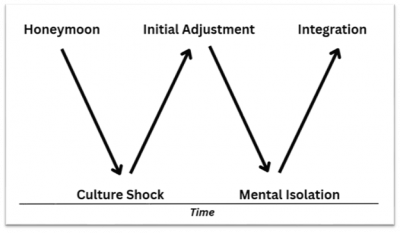
First, we must acknowledge where students are in their transition. A useful reference here is “the W curve”—a model initially published by Gullahorn and Gullahorn in 1963 to understand the process of culture shock and integration. Since its introduction to the field, higher education researchers have adapted the W-curve as model for the process of college student transition (Zellner and Mosier, 1993), (Berardo, 2012), (Schartner et al, 2015), (Zhao, 2025). While some argue that this model is not borne out by our best data for all students, e.g. (Chien, 2016) and (Dailey-Strand et al, 2021), it remains a helpful tool for identifying predictable phases that many students will experience in their first semester.

As students began the semester full of positive anticipation, they enjoyed the “honeymoon” phase, when everything felt new and exciting. However, as the novelty wears off and the reality of their new lifestyle settles in, they enter the “culture shock” phase. Around this time, many students (especially international students) will experience homesickness. The absence of familiar food, people, and routines places significant pressure on students’ brains and bodies to adapt, which can bring on symptoms of physical and mental illness.

Compounding these transitional challenges is the expectation to quickly form deep friendships. Many students believe they should have already found their “people,” and when reality doesn’t match this expectation, feelings of loneliness and isolation can emerge. A recent survey (Active Minds and Timely Care, 2024) found that nearly two-thirds of college students in the U.S. report feeling lonely, and those who do are four times more likely to experience severe psychological distress.

Academic stress adds yet another layer of complexity to this transitional period. As they adapt to the academic rigors of college, some students may fail an assignment or exam for the first time in their lives. This experience can trigger feelings of imposter syndrome and self-doubt.

Irregular sleep patterns, which are common among students (Lund et al, 2010) can exacerbate these issues. Poor sleep is widely understood to negatively affect overall well-being and recent work by Cresswell et al. (2023) also suggests that sleep quality can predict first-year students’ GPAs. Unsurprisingly, students who sleep less or have inconsistent sleep schedules tend to earn lower grades.

Though the phase of initial adjustment is on the horizon, many students are currently facing these overlapping physical, mental, social, emotional, and academic challenges. Here are a few ways we can support them within and beyond the classroom.

Notice and check in

  • As a group: Before diving into content for the day, start each class by gauging how students are doing. A quick thumbs-up/thumbs-down/middle poll works well. Invite students to share briefly to acknowledge their experiences. This practice centers student well-being, shows care, and helps build trust which may make students more likely to approach you when personal challenges affect their academics.
  • Individually: If you notice a student seems off, don’t hesitate to check in after class. Just knowing that someone on campus notices can have a positive impact. And for the students who you aren’t seeing in class? Send them an email every time they are absent- even if you do not get a response. Let them know you noticed their absence, hope they’re doing well, and offer support.

Find opportunities for flexibility

  • Deadlines and academic standards matter. We should always hold our students to high expectations. However, flexibility doesn’t necessarily mean lowering expectations. Consider alternative ways students can engage or demonstrate learning. Can they choose different formats for assignments? Can they participate asynchronously? Offering options empowers students and helps them succeed by leveraging their strengths, especially during stressful times.

Normalize failure

  • Every one of us has failed, probably multiple times in our lives. Over time, we come to see these experiences as learning opportunities and may even welcome failure as part of the process necessary for meaningful growth. Share your own experiences with failure, including the emotions that came with it, and how those moments contributed to your success. This helps students reframe their own setbacks and encourages resilience and experimentation instead of self-doubt.

Draw on faculty/staff networks

  • If a student could benefit from campus resources, try going beyond suggesting they “visit office x”. Instead, see if you can make a personal connection for the student with a staff member in that office, or even walk them over. This can help students to actually access and engage the resources they need. If you have a first-year student in your class who is repeatedly absent, unresponsive, or who appears to be struggling with their transition, the First Year Experience office can help. You can make a referral using this form, and FYE staff office will draw on their connections across campus to reach and support the student.  If you are concerned that a student may be a danger to themselves or others, be sure to complete a Care Team Referral.

As faculty and staff, we have a unique opportunity to support our students holistically. By noticing changes that arise in students’ transitions, checking in, offering flexibility, normalizing failure, and leveraging our campus networks, we can help students feel seen, supported, and empowered as they navigate their first semester in college.

References

Berardo, K. (2012). “Framework: Four Key Components of Transition Planning” in Building 

Cultural Competence: Innovative Activities and Models, Deardorff, D.K. and Berardo, K. eds. New York Routledge.


Chien, Y.-Y. G. (2016). After six decades: Applying the U-curve hypothesis to the adjustment

of international postgraduate students. Journal of Research in International Education, 15(1).


Creswell JD, Tumminia MJ, Price S, Sefidgar Y, Cohen S, Ren Y, Brown J, Dey AK, Dutcher JM,

Villalba D, Mankoff J, Xu X, Creswell K, Doryab A, Mattingly S, Striegel A, Hachen D, Martinez G, Lovett MC. (2023) Nightly sleep duration predicts grade point average in the first year of college. Proc Natl Acad Sci,120(8).


Dailey-Strand, C., Collins, H. and Callaghan, D. (2021) ‘Those First Few Months Were

Horrible’: Cross-Cultural Adaptation and the J-Curve in the International Student Experience in the UK and Norway. Journal of Comparative & International Higher Education, 13(4).


Gullahorn, J. T., & Gullahorn, J. E. (1963). An extension of the U-curve hypothesis. Journal of 

Social Issues, 19(3).


Lund H. G., Reider B. D., Whiting A. B., Prichard J. R. (2010) Sleep patterns and predictors of

disturbed sleep in a large population of college students. J. Adolesc. Health 46.


Schartner, Alina & Young, Tony. (2015). Culture shock or love at first sight? Exploring the

‘Honeymoon’ stage of the international student Sojourn. In Fabricius, A.H., Preisler, B. (eds) Transcultural Interaction and Linguistic Diversity in Higher Education. Palgrave Macmillan, London.


Zeller, W. J. and Mosier, R. (1993). Culture shock and the first-year experience. Journal of 

College and University Student Housing, 23(2).


Zhao, X. (2025). Comparison of theoretical models of acculturation from the perspective of

educational psychology. World Journal of Educational Studies, 3(1).

Office of the Provost

First-Year Focus: August 29, 2025

Relentless Welcome

There are few experiences more affirming than being genuinely welcomed by someone who is glad to see you. Whether it’s the warm embrace of a loved one, the spark of recognition in an old friend’s eyes, or your dog’s tail wagging at the door, these moments remind us that we are seen, valued, and that we belong.

This fall, we are thrilled to welcome the largest incoming class of Huskies in UConn’s history. These students bring with them a rich diversity of backgrounds, perspectives, and aspirations. They will become the researchers, entrepreneurs, innovators, and change-makers who will shape our university and our world. But as the excitement of move-in and the energy of our Week of Welcome begins to wear off, we must ask ourselves: how will we continue to welcome students into our classrooms, our work, our research, and our community? For it is their authentic participation in these spaces that will allow them to ‘become’ (Young and Bunting, 2024a).

An abundance of research demonstrates that relationships are central to student success in college (Felten and Lambert, 2020). And while peer connections are important, it is the meaningful relationships students form with faculty and staff that often make the greatest impact. When students experience genuine care from faculty and staff, they are more likely to thrive academically, persist through challenges, and develop a strong sense of identity and purpose (Astin,1978; Bensimon, 2007; Young and Bunting, 2024b). This effect is especially pronounced for students from historically marginalized communities (Strayhorn, 2012; Kezar and Maxey, 2014).

A simple “How are you doing?”, asked with curiosity and care, can open the door to connection. Offering even small, personalized gestures can build trust and signal to students that they matter. And when students feel safe and supported, they are more willing to take the intellectual and personal risks that lead to transformative growth.

As we consider the transition of our first-year students, we must especially bear in mind the extent to which they enter on the periphery of our academic communities. By inviting students in to work with and alongside us as experienced scholars and practitioners, their process of transition takes them from novice learners to full members of our communities, capable of contributing as increasingly advanced participants.

So this year, let’s adopt a mindset of “relentless welcome” (Felten and Lambert, 2020). Let’s actively invite students into our work as scholars, researchers, and practitioners. Let’s offer them a seat at the table, a role in the lab, a voice in the conversation. Let’s show them that they belong—not just at UConn, but in the work that defines it.

Together, we can create a campus culture where every student feels seen, supported, and inspired to become all they are meant to be.

Jordan Ochs, Ph.D.

References

  • Astin, Alexander W. Four Critical Years. Jossey-Bass, 1978.
  • Bensimon, Estela M. “The Underestimated Significance of Practitioner Knowledge in the Scholarship on Student Success”, Review of Higher Education, 2007.
  • Felten, Peter and Lambert, Leo M. Relationship Rich Education. Johns Hopkins University Press, 2020.
  • Kezar, Adrianna and Maxey, Dan. “Faculty Matter: So Why Doesn’t Everyone Think So?”, Thought and Action, 2014.
  • Strayhorn, Terrell, L. College Students’ Sense of Belonging: A Key to Educational Success for All Students. Routledge, 2012.
  • Young, Dallin and Bunting, Bryce. Rethinking Student Transitions: How Community, Participation, and Becoming Can Help Higher
  • Education Deliver on its Promise.
  • University of South Carolina National Resource Center for The First Year Experience and Students in Transition, 2024 (a).
  • Young, Dallin and Bunting, Bryce. “What if We Rethought the Ways We Describe College Student Transitions?”, About Campus, 2024 (b).

Office of the Provost

Program Completion Review Process

Dear Colleagues,

I recently provided an update on our academic program review process to the Academic Affairs Committee of the Board of Trustees and am writing to share the same update with you today. As you know, this cyclical process was resumed last year and this fall it will enter into its next stage.

First, revisiting the background: this effort is also colloquially known as the low-completion or low-enrollment process. One of the roles of the provost’s office is to help academic departments start and develop new programs, but also to review existing programs to help ensure they continue to remain relevant, draw student interest, and build strength so they can have as great an impact as possible.

We set standards to identify low enrollment programs, which are modest:  programs need to have awarded 100 or more undergrad degrees over a five-year period (in this case, 2018 – 2023), 50 or more masters degrees, 25 or more graduate certificates, and 10 or more doctorates over that same period.

This is the bar most of our academic programs need to meet and when they don’t, we need to engage with the program, the faculty, and the dean to ask some key questions: is the program appropriately small? Could it accommodate more students? Are there barriers to students entering or succeeding, such as confusing overlap with other programs or outdated curriculum? Is the program partnering effectively with Admissions? Does it need to create new pipeline programs?

Essentially: why is this program low-enrollment/low-completion and what can we do about it? This is basic “academic housekeeping” which was routine for many years at UConn but was dormant for a period of time amid transitions in the provost’s office before resuming last year.

During the first stage of this process, the decision was made to close seven graduate and three undergraduate programs. Several of these were graduate certificates that were not drawing students and had not been for some time. Others were already “in the freezer,” meaning inactive but not yet officially discontinued.

As a reminder, any decision on program closure is made by the faculty, the department head, and the dean. The primary role of the provost’s office in this process is to ask the question; the decisions are ultimately made collaboratively and a recommendation is then brought to the board of trustees if it’s determined that a change needs to be made.

The process has already had a positive impact: for example, one department streamlined its majors and curricula to make them much clearer and also simplified the pathways for students to enter its programs and be successful in them. Other programs have made similar changes aimed at reinvigorating the program, enrolling more students, and better supporting student success, which is the central goal of this work.

It should be noted that some programs are small by design for any number of reasons and have continued unchanged in light of that.

This fall, each academic program that was identified as low-enrollment/low-completion last year will be asked for an update regarding the steps that have been taken, or plans that have been made, to enhance their enrollment and completion rates going forward. This will be reviewed and evaluated by academic leadership with an eye on what is most likely to be effective.

Finally, it’s also important to point out that the benchmarks identified above are not the only measure used when evaluating the success or value of an academic program. For example, we are home to a number of programs that may not have a high number of majors in them, but very high numbers of students take courses in these programs to fulfill their general education requirements, which is invaluable to our students and to the institution. So the process is more holistic than a simple “all or nothing” approach.

Like PTR, this is a cyclical process we will repeat on an annual basis with the goal of using continuous evaluation to help support continued growth and success.

I’m grateful for the thoughtful participation of the deans and faculty in this process and the leadership of the provost’s office team in designing and implementing it and supporting the deans and faculty in their deliberations.

Sincerely,
Anne D’Alleva, Ph.D.
Provost & Executive Vice President for Academic Affairs

Office of the Provost

Important Reminders for Course Instructors

Dear Colleagues,

As the start of the new semester comes closer, I wanted to reach out to you all with some timely reminders. If you will be instructing a course in the coming semester, please be sure to read and adhere to these reminders. 

Best wishes for a productive and enjoyable semester!

Sincerely,

Gladis Kersaint, PhD

Vice Provost for Academic Affairs

***************************************

Course Syllabi

Consistent with our course approval processes and to support consistency across sections of the same course, course syllabi should include:

  • Course Description: The course description should quote the description noted in the undergraduate or graduate catalog verbatim.
  • Course Learning Objectives: Approved course-level learning objectives, which should be shared across all sections of the same course.
  • Student Notification of Absences: Students are responsible for consulting the course instructor and making up for missed work due to planned absences, such as those related to religious observations (see the related section below).Students are also responsible for identifying potential conflicts with final examinations and must contact the Dean of Students Office for final examination accommodation. To remind students of these expectations, we encourage instructors to address this expectation as part of their syllabi.
  • Refer to the Creating your Syllabus page for additional syllabi information.

Academic, Scholarly, and Professional Integrity and Misconduct Policy

Instructors are expected to include a link to the Academic, Scholarly, and Professional Integrity and Misconduct Policy (effective as of July 2023) as part of course syllabi or any other academic/scholarly activity and include any additional unit-specific expectations. Additional information about Academic Misconduct, including reporting incidences of misconduct, are available here.

Course Modalities

All courses must be delivered in the modalities as listed in the course schedule. Instructors are not permitted to change the modality in which a course is delivered. If there is a need to change the modality temporarily due to unanticipated circumstances, the course instructor must obtain prior approval from the Department Head and Dean. Violations of this can result in disciplinary actions.

Student Administration System: Ensuring Accuracy

Please ensure that your semester schedule is accurate and complete in the Student Administration System. In addition to ensuring that you have access to course materials, accurate class instructor assignment information is critical to the success of the SET process as well as reporting for student-faculty ratio and courseloads.

Observation of Religious Holidays

Course instructors are expected to reasonably accommodate individual religious practices unless doing so would fundamentally alter class objectives or result in undue hardship to the University’s legitimate business purposes. Such accommodations may include rescheduling an exam, giving a make-up exam, allowing a presentation to be made on a different date, or assigning the student appropriate make-up work that is intrinsically no more difficult than the original assignment. The Religious Observation webpage includes information on key religious observances this academic year. It also contains links to UConn’s policy on religious accommodations for students, faculty and staff, and resources to learn more about individual holidays. If you notice a religious holiday that is not included on this webpage, please contact provost@uconn.edu.

Mid-Semester Grade Submission Requirement

Per the Bylaws, Rules, and Regulations of the University Senate (E.6, Mid-Semester and Semester Reports), instructors of 1000 and 2000-level courses must submit mid-semester grades for all students during the mid-semester grading period which spans the sixth through eighth week of the semester. Instructors of all other courses are strongly encouraged to do the same. Timely submission of midterm grades is an integral part of our student success initiatives, enabling advisors to identify and support students who may need intervention to achieve satisfactory academic progress.

  • To facilitate this, ensure you have scheduled one or more course assessments before the midsemester grading period to enable you to provide students with feedback on their progress.

Requests for Athlete Progress Reports

To support student success initiatives, instructors are encouraged to respond when the Counseling Program for Intercollegiate Athletes (CPIA) requests student progress reports. This will enable the counselors to give our students appropriate advice and support.

Last Date of Student Academic Engagement Requirement

Effective as of Spring 2024, when submitting final grades for students with non-passing grades, instructors must submit the date of last academic engagement. The collection of this information supports institutional compliance with federal financial aid regulations. Failure to provide this information may result in negative financial consequences for students. Please remember that you can take class attendance (e.g., taking roll or asking students to sign a roster during the class session).

Instructional Support Resources

Faculty are expected to make themselves available to students for additional instructional support. The common approach is to hold regularly scheduled office hours and by appointment. When you identify office hours, ideally these will maximize the likelihood that students can attend them by providing multiple options that include different days and different times of the day.

Student Engagement in Courses: Support for Students

If you notice students who are having difficulty or are not engaged in your courses, please refer them to appropriate university units for additional support:

Professional Development and Learning Opportunities.

UConn offers a range of professional development opportunities for faculty and staff. Please learn about them here:

Also, I encourage you to explore learning opportunities available from the following online resources that you can access with your UConn credentials (e.g., @uconn.edu email address):

Office of the Provost

Observance of Juneteenth

Dear Colleagues,

On Thursday, June 19, the University will observe Juneteenth, which commemorates the day in 1865 when the last enslaved people in the United States were informed of their freedom. In 2023, the State of Connecticut officially recognized Juneteenth as a state holiday. This year, the University Senate passed a resolution to designate it as a non-teaching day at UConn.

As a result, classes will not be held and no instructional activities should be scheduled on that date. The University encourages all departments and offices that are able to close in observance of the holiday to do so.

We recognize that certain critical University operations and departments will need to remain open to meet student and campus needs. We encourage you to talk to your supervisor to determine department needs. However, it is our expectation that most University operations will close to observe the holiday. Questions regarding scheduling or time issues should be referred to laborrelations@uconn.edu.

We look forward to the observance of this important day.

Sincerely,

Lakeesha Brown, Vice President & Chief Human Resources Officer
Anne D’Alleva, Provost & Executive Vice President for Academic Affairs
Jeffrey Hines, Vice President, Office for Diversity and Inclusion

Office of the Provost

Guidance for Pre-Tenure Faculty re Changes to Federal Funding

Dear Colleagues,

As you know, the federal government is implementing significant changes to research funding priorities and allocations. In this context, we want to reaffirm our institution’s commitment to supporting faculty research, especially during the critical pre-tenure period.

First and foremost, this is not a one-size-fits-all situation. The effects of these changes on pre-tenure faculty will vary by field, funding agency, and the individual research trajectories of faculty members.

Given these variabilities, at this time, the administration is not planning to petition the Board of Trustees to implement a universal extension of the tenure clock, as we did during the Covid-19 pandemic. We are in active communication with peer institutions, and this approach is in alignment with similar institutions nationwide. Schools and Colleges are working with the Office of the Vice President for Research (OVPR) to assess the current funding landscape and will work with the Provost’s Office to identify and address any field-specific impacts on their promotion, tenure, and reappointment (PTR) processes.

We strongly encourage each faculty member to take a proactive approach in assessing how the federal funding changes may affect their research and engage in strategic planning for their tenure application as part of the PTR process.

Below are some key points that pre-tenure faculty should consider, in alignment with the OVPR guidance:

  1. Stay Informed and Engaged

Federal agencies including the NSF, NIH, DOE, and others, are adjusting funding mechanisms, research priorities, and review processes. The OVPR has been providing briefings and resources to help faculty navigate these changes and has established four task forces to help the university community understand and respond to these changes effectively.  If you are interested in joining a taskforce, please contact Matt Mroz (matthew.mroz@uconn.edu).

  1. Diversify Funding Sources

Given potential shifts in federal allocations of research funding, it is prudent to explore alternative funding sources, including:

  • Private foundations
  • Industry partnerships
  • State and local funding opportunities
  • Interdisciplinary collaborations that align with new funding priorities
  • Institutional support, including small and large grants, seed funding, and limited bridge funding that may be available through the Schools and Colleges and Centers and Institutes.
  1. Align Research with Emerging Federal Priorities (Where Feasible)

While maintaining scholarly identity is paramount, faculty should consider how their research can intersect with emerging federal priorities such as AI, quantum, and data science; biotechnology and health sciences with a focus on chronic disease; and national security. Adjustments in framing or collaboration may increase funding potential.

  1. Maintain Open Communication with Mentors, Department Leadership, School/College Leadership, and OVPR

Pre-tenure faculty should draw on their department head, senior colleagues, dean and associate deans, center/institute directors, and the OVPR as essential resources. Regular conversations about tenure expectations, funding realities, and evolving research trajectories can help faculty make informed decisions about their scholarly path.

  1. Utilize Institutional Support Services

The OVPR offers many resources to support faculty in this work, including proposal development assistance (e.g., proposal coordination, writing, editing, review), grant-writing workshops, and communication resources.

Please know that the guidance for associate professors working toward their promotion to full professor is much the same, since they may face similar challenges in this funding landscape. Associate professors often have access to greater resources—such as unrestricted fund accounts, well-equipped labs, and extensive professional networks—that can help them navigate a shifting funding landscape. They should be intentional about leveraging these assets to sustain their research productivity. Associate professors should discuss their individual timeline for promotion with their department head or dean since the promotion timeline for associate professors is more flexible than the tenure timeline.

And a note to full professors: While you, too, may be facing similar funding challenges, your leadership and experience are especially valuable during this time—serving as a critical resource for colleagues, department heads, deans, and the OVPR. We are grateful for the numerous instances of mentorship and support that we have already seen senior faculty offer their more junior colleagues. Please remember that a sympathetic ear, a bit of sound advice, or a problem-solving brainstorm session can make an enormous difference alongside institutional supports.

Faculty who have questions or need guidance tailored to their specific circumstances should not hesitate to reach out to the OVPR regarding research and their department head, dean, and/or the Provost’s Office regarding the PTR process and expectations.

Please remember that if you encounter funding-related roadblocks or receive notification of changes to a federal research grant that you have already been awarded, you should reach out immediately to OVPR (research@uconn.edu) to explore available support mechanisms. The OVPR website provides essential guidance regarding the steps you need to take.

Although the funding landscape is evolving, we want to emphasize to all faculty that you are not navigating these challenges alone. We remain steadfast in our commitment to supporting your research productivity and professional success at every stage of your career.

This is certainly a time of extraordinary change that is testing our researchers, but our strong sense of community and commitment to UConn’s mission as a flagship Land and Sea Grant institution will see us through these challenging times, as they have in difficult times before. We are grateful every day to work with such outstanding colleagues.

Sincerely,

Anne D’Alleva, Ph.D.
Provost & Executive Vice President for Academic Affairs

Pamir Alpay, Ph.D.
Vice President for Research, Entrepreneurship, and Innovation

Office of the Provost

Test

Test